
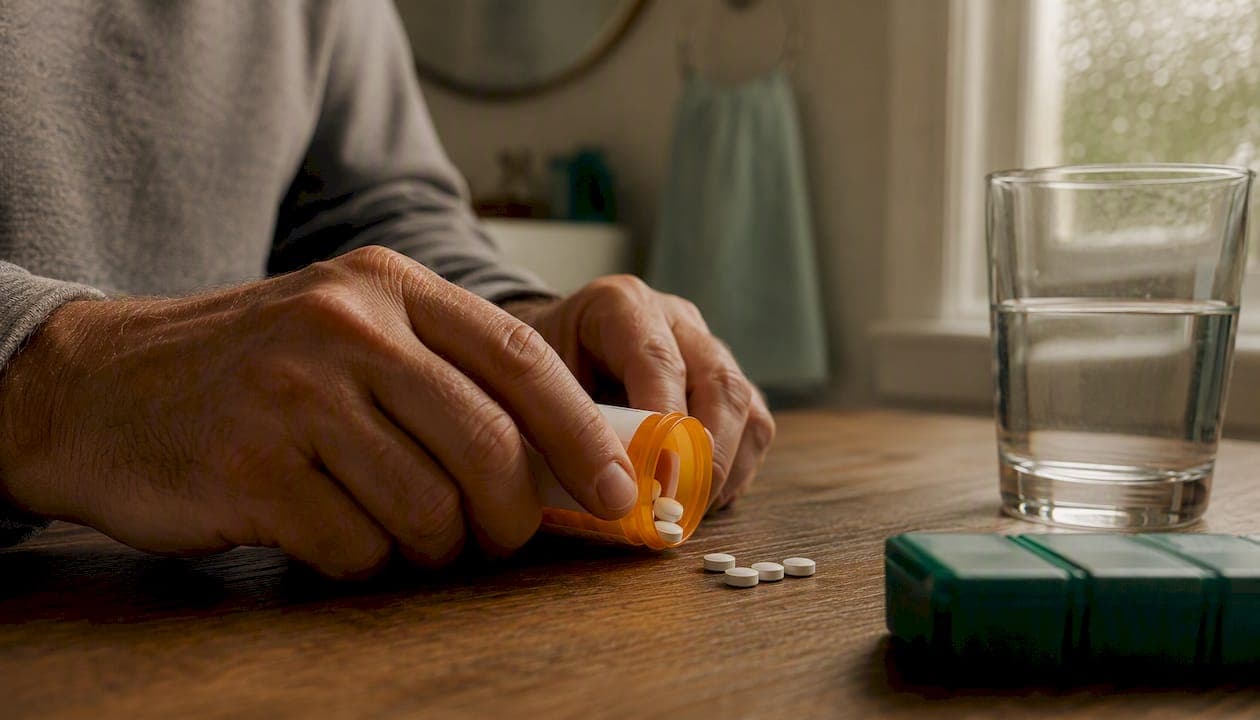
Finasteride commonly causes sexual side effects, including decreased libido, erectile dysfunction, and reduced ejaculate volume. It has also been linked to psychiatric effects such as low mood and, rarely, suicidal thoughts. Most of these effects are uncommon and improve over time, but some persist, so worrying symptoms deserve a proper review.
Finasteride is FDA-indicated for men only. Women who are or may become pregnant must not handle crushed or broken finasteride tablets, due to the risk of harm to a male fetus. It can also cause sexual side effects (reduced libido, erectile dysfunction) in a minority of men, which usually resolve after stopping treatment. Discuss these risks with a physician before starting.
This applies whether you're taking generic finasteride, Propecia (finasteride 1 mg, for hair loss), or Proscar (finasteride 5 mg, for prostate enlargement).
Some symptoms need action today, not "wait and see":
- Breast lumps, swelling, or nipple discharge
- Signs of a severe allergic reaction (facial swelling, breathing difficulty)
- New or worsening suicidal thoughts
Next steps: stop the medicine only if your GP tells you to, or if you're experiencing severe psychiatric symptoms. For red flags, get same-day GP or emergency care. Report any reaction to your national medicines regulator.
Key Takeaways
Finasteride's sexual side effects are common but often manageable, while psychiatric symptoms demand faster, more decisive action.
| Point | Details |
|---|---|
| Sexual side effects are common | Decreased libido, erectile dysfunction, and ejaculation changes affect more than 1 in 100 men, per NHS guidance. |
| Year one carries the highest risk | Trial data shows incidence peaks in year one and often declines with continued treatment. |
| Mood changes need urgent attention | Stop the medicine and seek emergency help immediately for suicidal thoughts; contact your GP promptly for other mood changes. |
| Rare symptoms need same-day care | Breast lumps, severe allergic reactions, and persistent testicular pain all warrant urgent assessment. |
| Report what you experience | Use the MHRA Yellow Card scheme or your national equivalent to help regulators track safety signals. |
| Novagp offers a fast review route | Same-day GP consultations let you discuss side effects, adjust your prescription, or get referred, all without an in-person wait. |
Table of Contents
- Common finasteride side effects and how often they happen
- Psychiatric side effects: mood changes and when to worry
- Rare but serious physical side effects
- Timeline: when side effects start and whether they go away
- What to do if you get side effects
- Reporting side effects and the regulator position
- How finasteride works and who shouldn't take it
- Getting a fast, proper review if something feels wrong
- Talk to a GP today if finasteride side effects are worrying you
- Sources
Common finasteride side effects and how often they happen
The sexual side effects are the ones most men have actually heard about, and for good reason. Decreased libido, erectile dysfunction, and ejaculation disorders (including reduced semen volume) affect more than 1 in 100 men taking finasteride.
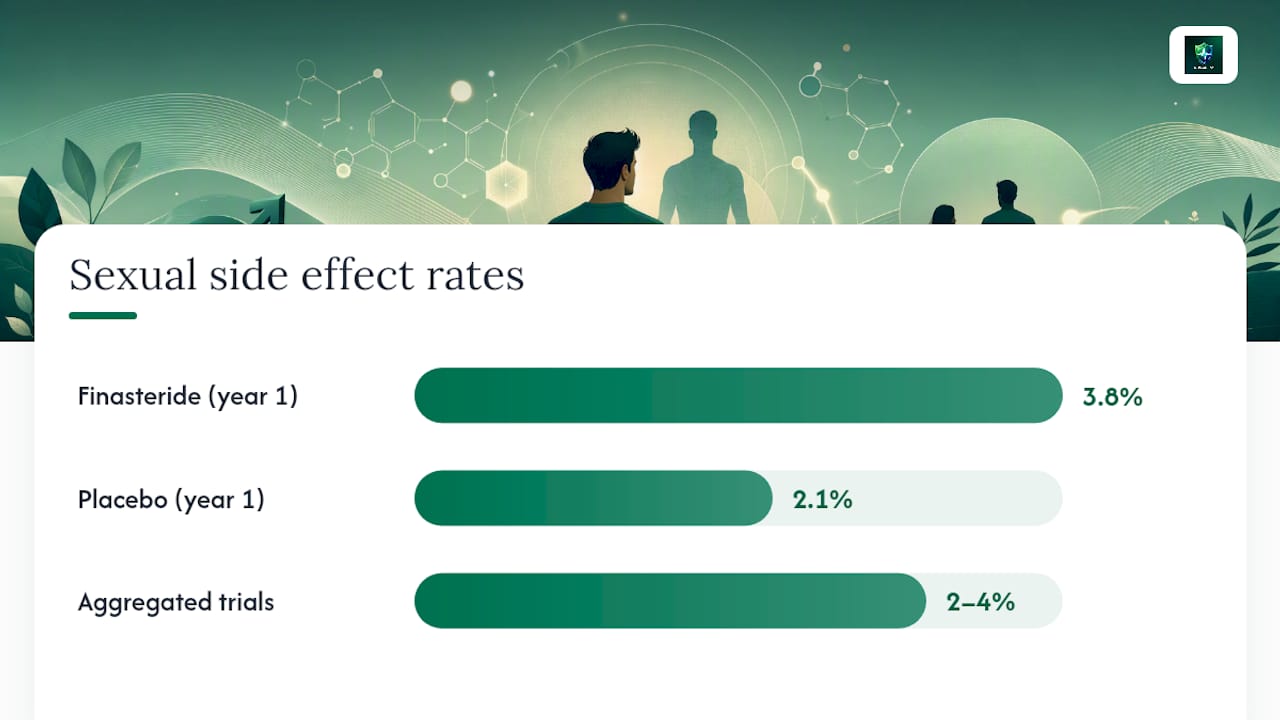
Trial data gives a clearer picture than anecdote. A pooled analysis found 3.8% of finasteride patients reported sexual adverse experiences versus 2.1% on placebo in year one, roughly a two-fold increase, though the absolute numbers stay small. Rates differ between the 1 mg dose used for hair loss and the 5 mg dose used for prostate enlargement, with the higher dose associated with more frequent reports.
Here's the part that reassures most men once they hear it: symptoms often ease with time.
- Decreased libido: usually the first symptom noticed, often within weeks
- Erectile dysfunction: reported in a minority, tends to improve for many
- Ejaculation disorder or reduced volume: less commonly discussed but well documented
Statistic to remember: aggregated trial data puts the sexual side effect signal for finasteride-treated men at around 2 to 4%, against a placebo baseline of roughly 2%.
Keep a simple log: date of onset, what changed, how often it happens, and anything else going on (illness, alcohol, a new medication, poor sleep). That log is worth more to a GP than "it's been off for a while."
Pro Tip: Before assuming finasteride is the cause, rule out the obvious. Stress, alcohol, poor sleep, and other medications (particularly blood pressure drugs or antidepressants) can all cause identical symptoms. A two-week symptom diary makes it far easier to spot a genuine pattern.
Psychiatric side effects: mood changes and when to worry
This is the area regulators have moved on directly. The European Medicines Agency has advised vigilance for new or worsening depression and suicidal ideation in men taking finasteride, and clinicians are now expected to ask about mood at review.
Watch for:
- New low mood or a depression that feels different from before
- Suicidal thoughts, even fleeting ones
- Increased anxiety or disrupted sleep
The evidence here is genuinely harder to pin down than the sexual side effect data. Reports exist, and some describe symptoms continuing after stopping the drug, but causality and exact incidence remain debated among researchers.
If you have any suicidal thoughts or a plan to act on them, stop the medication and get emergency help immediately. For other mood changes, don't wait for your next scheduled appointment. Call your GP and say plainly: "I've started finasteride and I've noticed my mood has changed. I need a review."
Rare but serious physical side effects
These don't happen often, but when they do, they need same-day medical attention, not a wait-and-see approach.
- Breast changes: lumps, tenderness, enlargement, or nipple discharge. Post-marketing reports classify these as rare, occurring in fewer than 1 in 1,000 users, but any breast lump needs prompt assessment to rule out the rare case of male breast cancer.
- Allergic reactions: facial or throat swelling, hives, difficulty breathing. This is an A&E situation, not a GP-review one.
- Testicular pain: persistent pain warrants urgent evaluation rather than waiting it out.
One detail men rarely hear about until they need it: finasteride lowers PSA levels, the blood marker used to screen for prostate cancer. If you're due a PSA test, tell whoever orders it that you take finasteride, since the result may need adjusting to interpret correctly.
Quick checklist: breast lump, severe allergic symptoms, or new testicular pain: go to A&E or call for urgent GP care. Mild sexual side effects: book a routine review instead.
Timeline: when side effects start and whether they go away
Sexual side effects typically appear within weeks to a few months of starting finasteride, not years later. That timing itself is a useful diagnostic clue.
Long-term data shows a clear pattern: incidence is highest in year one and tends to fall with continued use. Reviews of the evidence describe declining new reports over years two to four, with some cohorts seeing new-onset symptoms drop below 0.3% by year five.
That's the average picture. It isn't universal. A small minority of men report symptoms that persist after stopping the drug entirely, sometimes described as post-finasteride persistent symptoms. The mechanism behind this isn't established, and it remains an active area of research rather than settled fact.
Age, dose, the condition being treated, other medications, and pre-existing mental health all influence how someone experiences finasteride. Two men on the same dose can have completely different timelines. That's not evasive vagueness. It's the honest state of the evidence.
What to do if you get side effects
- Assess severity first. Mild sexual side effects or low mood: book a GP review rather than stopping abruptly. Severe psychiatric symptoms or suicidal thoughts: stop and get help immediately.
- Don't stop on your own for mild symptoms unless your clinician has told you to. Sudden discontinuation isn't automatically safer and a review helps identify the actual cause.
- Prepare for the consultation. Bring your symptom timeline, current dose and formulation, other medications, and be ready to answer direct questions about sexual function and mood.
- Discuss the options. A GP might suggest watchful waiting, a dose review, switching treatment, stopping altogether, or referral to urology, andrology, or mental health services.
Pro Tip: If sexual side effects are the concern, ask your partner what they've noticed too. A second perspective on frequency and severity often gives a GP a clearer picture than self-report alone, particularly with symptoms that are easy to underplay.
Reporting side effects and the regulator position
Reporting isn't paperwork for its own sake. It's how regulators spot patterns before they become widely known problems.
- UK: report via the MHRA Yellow Card scheme, used for any suspected adverse reaction.
- US: the FDA MedWatch system serves the same function for American patients.
- Ireland: the HPRA operates an equivalent reporting pathway.
The EMA's 2024 to 2025 safety communications specifically flagged suicidal thoughts and depression as effects requiring reporting and clinical vigilance. Every report submitted adds to the safety signal regulators monitor, and that data shapes future prescribing guidance.
How finasteride works and who shouldn't take it
Finasteride blocks the enzyme 5-alpha-reductase, which lowers dihydrotestosterone (DHT) and shrinks the tissue responsible for hair loss or prostate enlargement, depending on the dose.
- Pregnant women or those who may become pregnant must never handle crushed or broken tablets. The drug absorbs through skin and can harm a developing male foetus.
- Men with certain pre-existing conditions should discuss risk with their GP before starting.
- Remember the PSA interaction mentioned earlier, and note the dosing split: Propecia at 1 mg for hair loss, Proscar at 5 mg for prostate enlargement, with the higher dose carrying a somewhat higher side effect signal.
Getting a fast, proper review if something feels wrong
Waiting weeks for a GP appointment while a side effect gets worse helps nobody. An online consultation can assess sexual or mood-related symptoms the same day, review whether your prescription needs changing, and issue a referral or sick note if needed.
- Same-day video or phone review with an Irish-registered GP
- Prescription review for finasteride, including switching or stopping
- Secure, EU-hosted records you can access afterwards
This route isn't a substitute for emergency care. If you have a red flag symptom, suicidal thoughts, a severe allergic reaction, or a breast lump, go to A&E or call emergency services directly.
A clinician's balance on benefit and risk
Most men tolerate finasteride well, but the sexual and mood-related side effects are real enough that vigilance and honest reporting to your GP matter. Risk shifts with dose and indication, so let your clinician weigh your individual case rather than a generic average.
Talk to a GP today if finasteride side effects are worrying you
If you've read this far because something feels off, that instinct is worth acting on rather than sitting with for another month. Novagp connects you with an Irish-registered GP by video or phone, often within the hour, so a worrying symptom gets a proper answer instead of another week of googling.
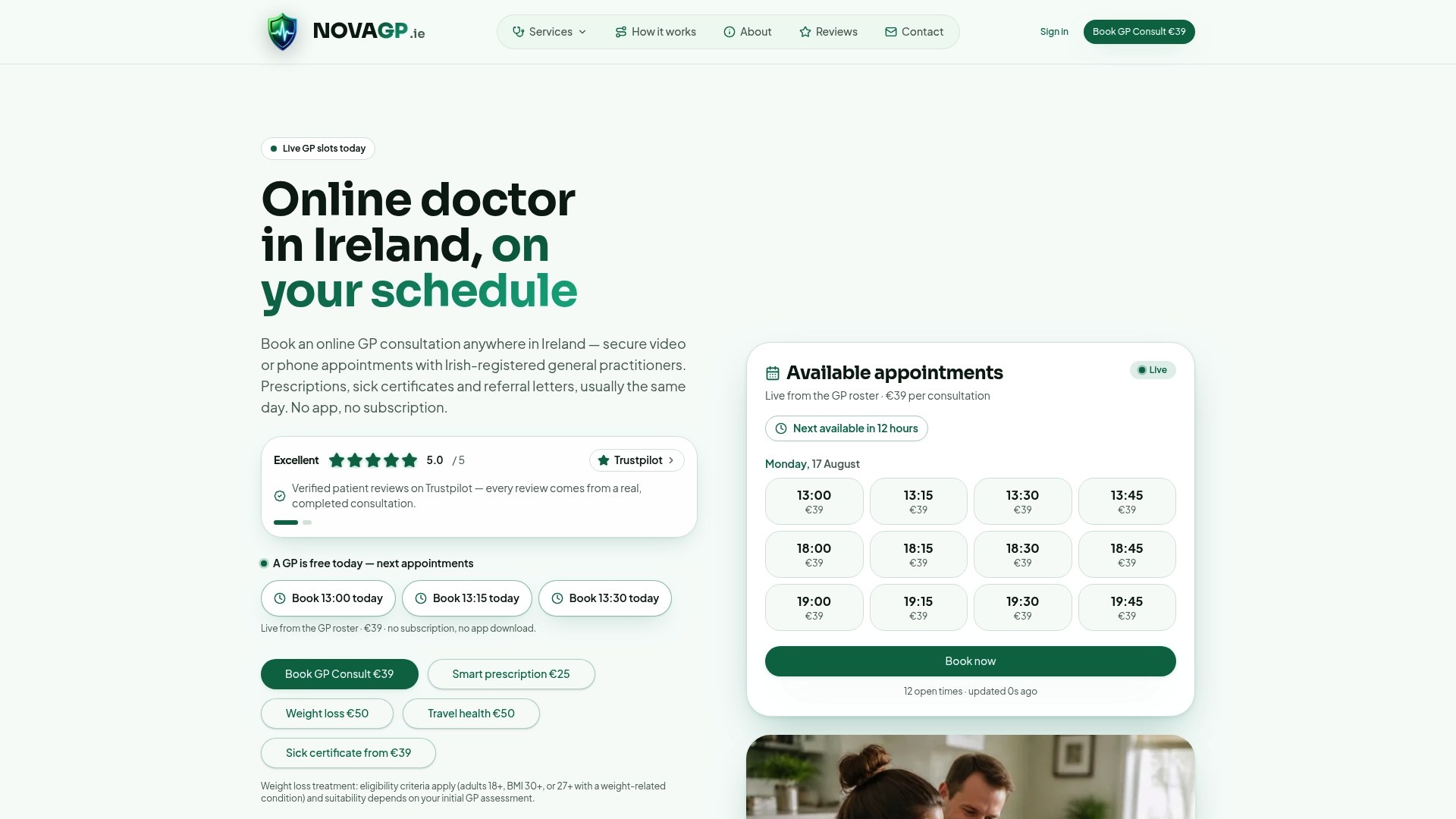
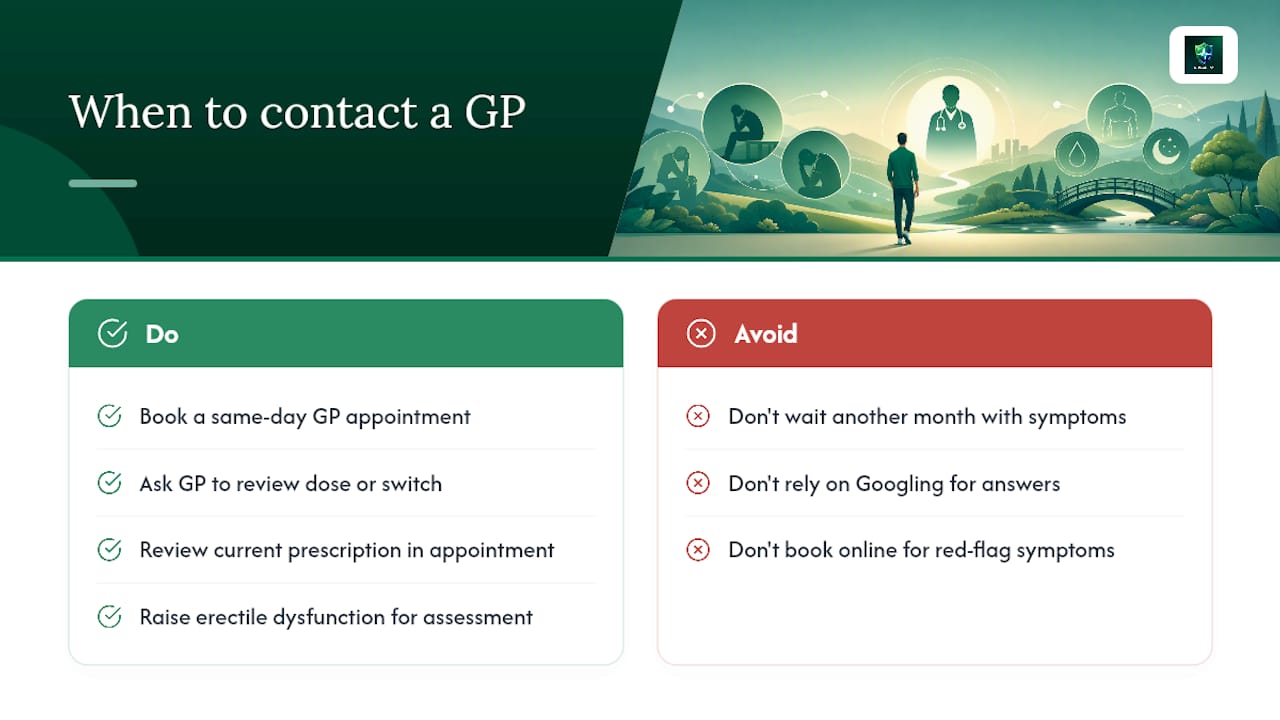
A same-day consultation means a GP can review your dose, discuss switching away from finasteride if needed, and check whether your symptoms need onward referral to urology or mental health services. Everything is stored securely on EU servers, there's no app to download and no subscription tied to your account, and if you're taking finasteride for hair loss, you can also review your current prescription in the same appointment. If erectile dysfunction has become the main issue, that's a separate assessment worth raising too, and low mood deserves its own dedicated conversation with a GP who can screen for it properly.
If you're dealing with a red flag symptom (a breast lump, severe allergic reaction, or suicidal thoughts) go to A&E or call emergency services now rather than booking online.
For everything else, book your GP appointment here and get a proper answer today.
Sources
- Side effects of finasteride - NHS
- Measures to minimise risk of suicidal thoughts with finasteride and dutasteride medicines - European Medicines Agency
- Finasteride tablet, coated - DailyMed
This article is general information, not a substitute for advice from a qualified doctor. Consult a qualified healthcare professional about your own circumstances before acting on anything here.
Recommended
- Male pattern hair loss — €25 Online Prescription Ireland | NOVAGP.IE
- Erectile dysfunction — €25 Online Prescription Ireland | NOVAGP.IE
- Menopausal vaginal dryness (topical oestrogen) — €25 Online Prescription Ireland | NOVAGP.IE
- Period delay (norethisterone) — €25 Online Prescription Ireland | NOVAGP.IE